
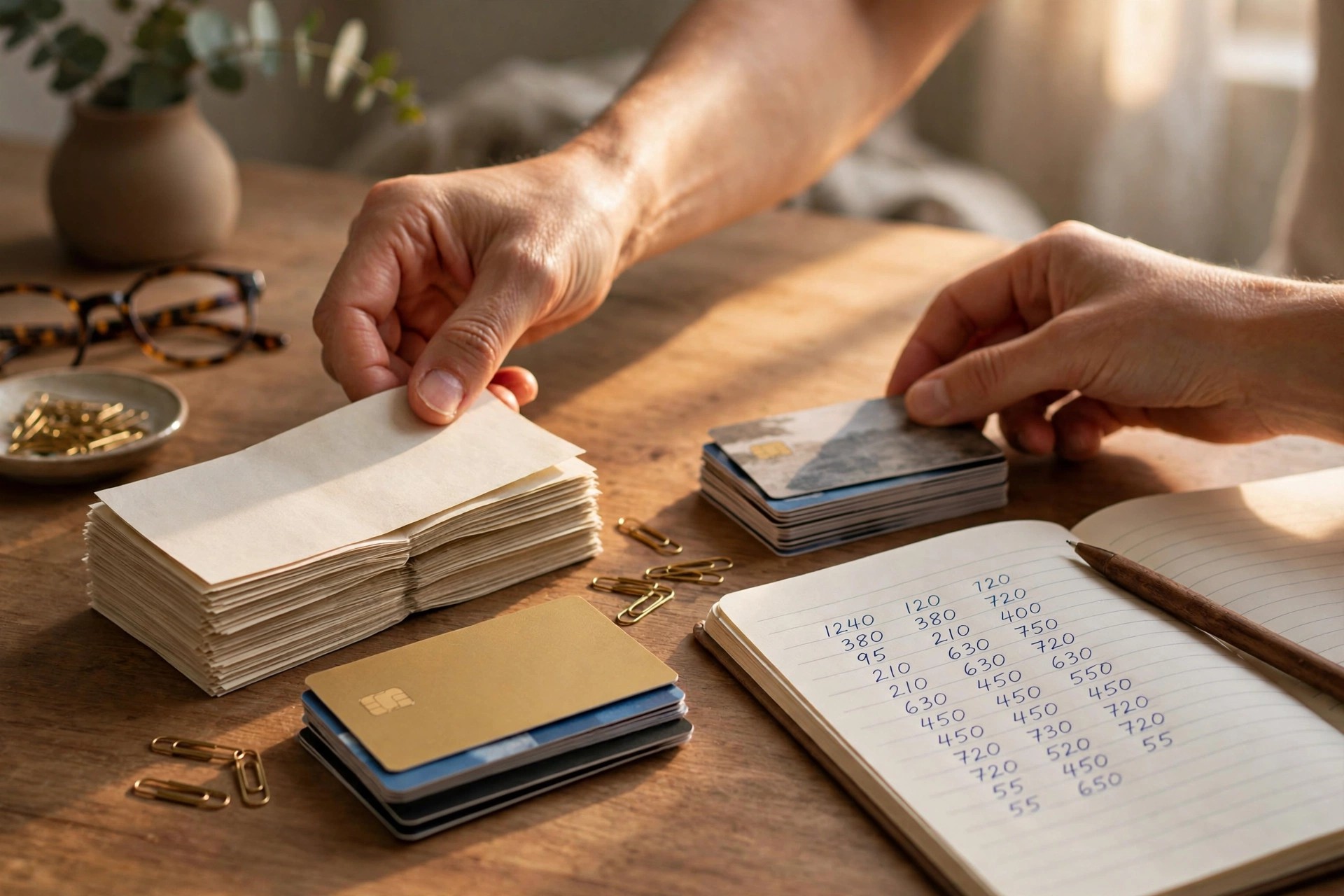
Has this ever happened to you? You had some money in hand at the start of the month — but before the month ended, you realized you had no idea where it all went?
There was a time in my life when it was exactly like that.
When I was around 20 years old, I wasn't very aware of managing my own money. I didn't have a fixed income of my own. My parents gave me money for what I needed. In other words, I didn't get pocket money or spending money from my own earnings — I got it from my family.
But the problem was somewhere else.
I didn't know how to plan and spend that money.
For example, say my parents gave me 5,000 taka at the start of the month. In the first few days, some of it went to buying necessary things, going out with friends, food, and small hobbies.
Then I thought — I still have money left!
So I bought some unnecessary things. Sometimes I bought something I would have been perfectly fine without.
And so 10 days, 15 days passed.
Towards the end of the month, when I sat down to calculate, I found that out of 5,000 taka, maybe only 300 or 400 taka was left.
Now the question is — where did the rest of the money go?
Did I spend it all on necessary things? Or did some of it go somewhere I could easily have avoided?
The problem was, I had no clear answer.

1. I Kept Making the Same Mistake
Slowly, it became a habit for me.
A new month would start, my parents would give me money as needed, I would spend it my own way. Then towards the end of the month I would realize there was hardly anything left in hand.
Let me explain with an example:
Say you get 5,000 taka at the start of the month.
- In the first week, you spend 1,500 taka.
- In the second week, you spend 1,200 taka.
- In the third week, you spend 1,400 taka.
- In the last week, you spend 900 taka.
Total spending: 5,000 taka.
Now you might say — all the money was spent on needs, after all!
But think a little — how much of it was truly necessary? How much was spent just because you wanted it? And which expenses could have been reduced with a little planning?
I didn't know the answers to these questions back then.
Only one thing was becoming clear to me — if this continued, I would never learn to manage my own money.
2. One Day I Asked Myself — How Long Can This Go On?
I started to realize: just because money is in your hand doesn't mean it's meant to be spent.
You also need to know how you're using it.
Because the problem isn't only that no money is left at the end of the month. The real problem is not understanding why the money ran out.
Say you spend an extra 100 taka every day. For one day, 100 taka may not seem like much.
But in 30 days, that becomes 3,000 taka.
Now think — if you had used that 3,000 taka with a plan, it could have gone to something you needed, something you wanted to learn, or savings for the future.
It was from this realization that I decided to make a plan for myself.
I wanted every single taka of mine to be accounted for.
3. I Built a Money Management Spreadsheet for Myself
I wanted a simple system where I could see my daily income, spending, remaining money, and spending limit.
Say you have 5,000 taka in hand at the start of the month.
You decide you won't spend more than 150 taka a day on average.
Now if you spend 250 taka one day, you've spent 100 taka more than your set limit.
You also need to know where that 100 taka went.
Maybe 50 taka went to food, 30 taka to transport, and 20 taka to buying something unnecessary.
This way, by keeping track of small expenses, you can understand at the end of the month where your money is going most.
Here are a few things I wanted in my spreadsheet:
Daily income and spending: how much money I got each day, and how much I spent.
Daily balance: how much money was left in hand after spending.
Daily Spending Limit: how much I planned to spend for the day.
Excess Spending: how much was spent beyond the set limit.
Expense Category: how much went to food, transport, shopping, entertainment, or other categories.
Example:
| Starting balance | 5,000 |
| Today's spending limit | 150 |
| Today's actual spending | 250 |
| Excess spending | 100 |
| Remaining balance | 4,750 |
Here, the excess spending is 100 taka. That information reminds me that I didn't spend according to my plan.
This isn't just about keeping accounts — it's also a way to understand your own spending habits.
4. Not Just Personal Spending — Business Investment Needs Tracking Too
Later, when I started thinking about my own side business, I realized that along with personal spending, business money also needs to be tracked separately.
Because personal spending and business investment are not the same thing.
Say you start a small digital business.
You invest 2,000 taka in a design tool, a domain, marketing, or some other necessary work.
Later, you earn 3,500 taka by selling your product.
Sounds good, doesn't it?
But there's something else here too.
If the business's other costs are 500 taka, then the calculation looks like this:
| Total investment | 2,000 |
| Revenue from sales | 3,500 |
| Other costs | 500 |
| Net profit | 1,000 |
In other words, just looking at the sales money isn't enough. After deducting the investment and other costs, you need to understand the real profit.
That's why I planned to keep Business Investment, Revenue, Other Costs, and Net Profit in my spreadsheet.

5. After Starting My Side Business, I Realized I Needed a Pinterest Strategy Too
To get my digital work in front of people, I started working on Pinterest.
But I realized one thing — just creating pins and publishing them isn't enough. I also need to know how much time I'm giving and what results I'm getting from that work.
Say you give two hours a day to Pinterest.
In that time, you are:
- Designing new pins.
- Working on Pinterest SEO.
- Searching for new keywords.
- Improving old content.
- Adding product links.
Now, if after a month you ask yourself which task took the most time and which type of content performed best, you need to have the answers.
So my strategy for Pinterest work is to keep an eye on these things:
- How many hours I worked each day.
- Which board or topic I worked on.
- How many pieces of content I created.
- How many impressions I got.
- How many saves.
- How many outbound clicks came in.
- How much income was made.
Another example:
Say you create 5 different Pinterest pins for one product.
After a month, you see that one of the five pins got more clicks than the others.
Then you can analyze that pin's design, title, keywords, and description.
This way, instead of guessing, you can plan your next content based on real results.
I wrote my full Pinterest Strategy in detail in this blog post:
My Pinterest Pinterest Strategy

6. Without a Content Calendar, Consistent Work Is Hard
While working on Pinterest, another thing became important to me — content planning.
Many times it happens: you sit down to work, but you can't even decide what to create content about.
Today one topic comes to mind, tomorrow another. But there's no fixed plan.
Say you're working on a digital product.
You can create several types of content around that same product:
- What problem does the product solve?
- How do you use the product?
- What problem are ordinary people searching for it because of?
- What are the product's special benefits?
- How can users benefit from it?
Now, if you arrange these topics in a content calendar beforehand, you won't have to think from scratch every day.
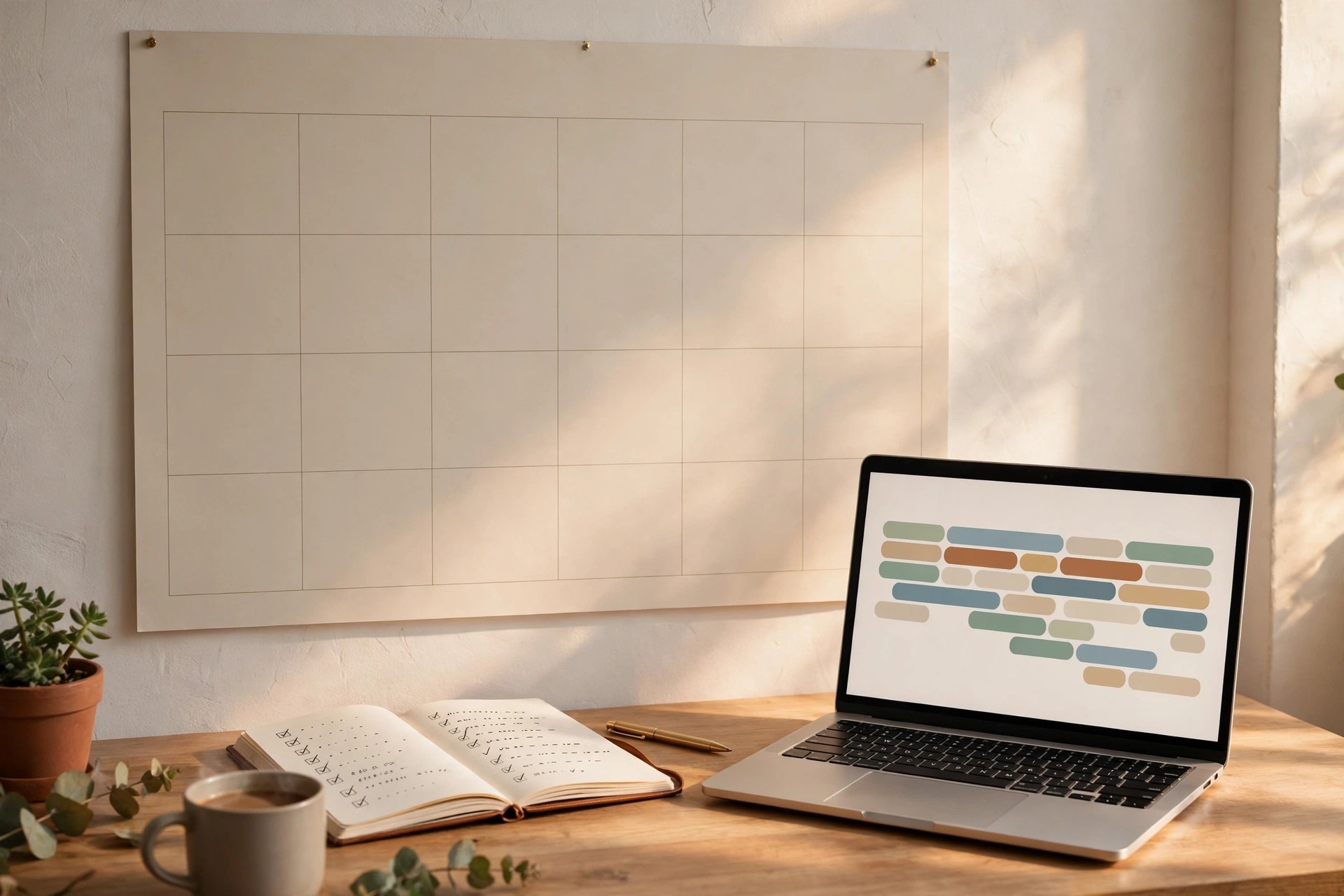
Here's what I wanted in my content calendar:
- Content Topic
- Target Audience
- Platform
- Content Format
- Title and Hook
- SEO Keywords
- Image or Video Creative Plan
- Publishing Date
- Destination Link
- Content Status
- Results of Published Content
This way, you can plan content for Pinterest, YouTube, Blog, and other platforms and move forward.
30-Day Social Media Content Calendar
7. Why I Wanted Everything in One Place
Now you might be wondering — why is it necessary to keep personal spending, business investment, Pinterest, and a content calendar together?
For me, the answer is very simple.
I want to understand where I'm using my time, my money, and my hard work.
Say, in one month you:
- Kept track of your personal spending.
- Saw how much money you invested in your business.
- Calculated how much income came from the business.
- Knew how much time you gave to Pinterest.
- Analyzed which content performed well.
- Created a new content plan for the next month.
Then at the end of the month, you won't just have a few numbers — you'll also have a complete picture of your work.
And using that information, you can make even better decisions next month.

8. Could This Spreadsheet Work for You Too?
If you've ever been unable to match your spending at the end of the month, then maybe you need a simple money management system too.
If you've started a new side business, you may need to keep track of your investment and income.
And if you work on Pinterest or any other social media platform, it's also important to monitor your time and your content's results.
The purpose of this spreadsheet is not to promise you overnight success.
Rather, to help you become more aware of your money, your work, and your time.
Final Words: Something New Starts From Solving Your Own Problem
I thought of building this system because I couldn't understand my own money-spending habits.
Then gradually, business, Pinterest, and content creation also became part of my work.
I realized that every new venture brings new responsibilities with it.
So I want every task to have a clear account, and to improve little by little every day.
I'm still learning. Still creating new things. And I'm trying to build digital solutions from my own experience that can help other people too.
Because for me, a good digital product doesn't start from a complicated idea — it starts from a real problem that genuinely needs solving.
Welcome to ANIKZONE
Here I share my digital products, new ideas, real experiences, and various tools built to solve problems.
My journey is still going. And every new task has just one goal — to create something a little better than before.

2027 Money Reset Spreadsheet
Want to keep your money in one place? Budget, debt payoff, savings, and bills — in one simple sheet.
Get the spreadsheet launch price $19 · Sheets + Excel · no macros · 1-page quick-start PDF includedPrevious Posts
- The Digital Rose Gift That Blooms — the story of the 3D rose gift product.
- The Wedding Cards We Couldn't Deliver — the story of the digital invitation website.
- 30-Day Social Media Content Calendar — the sheet I use to plan my own posting.

By Anik
I'm building a one-person digital product business in public — planners, printables, and content systems for side hustlers. Everything I share here is something I've actually tried. More about me →